
Source: The Guardian
Families of journalists who vanished into state prisons on ‘Black Tuesday’ in 2001 do not know whether they are even still alive
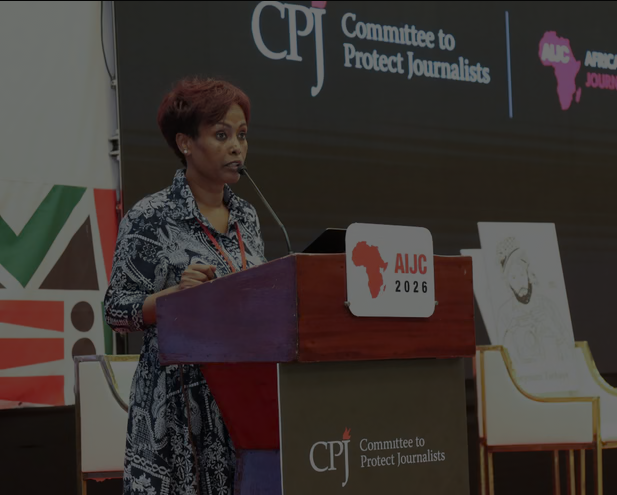
When Fisseha Yirgalem stepped on to the podium and began reading from a letter written to a man who may never hear it, the room full of journalists in Nairobi fell quiet.
The Eritrean writer’s personal tribute to Amanuel Asrat, a poet, writer, and founder of Zemen newspaper, was not merely about an abstract human rights case but about her mentor, former colleague and friend whose life had in effect been erased by the authoritarian state of Eritrea.
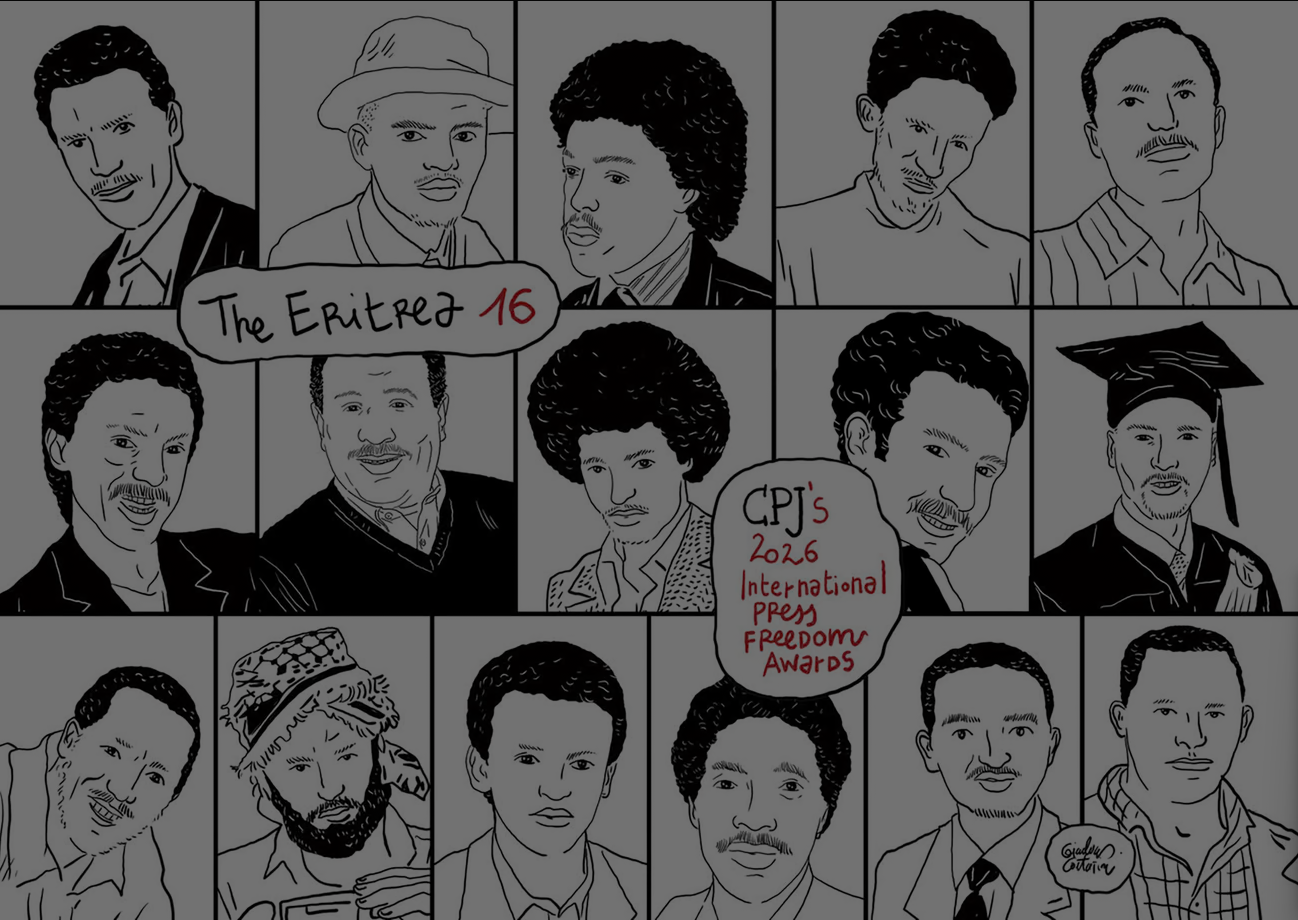
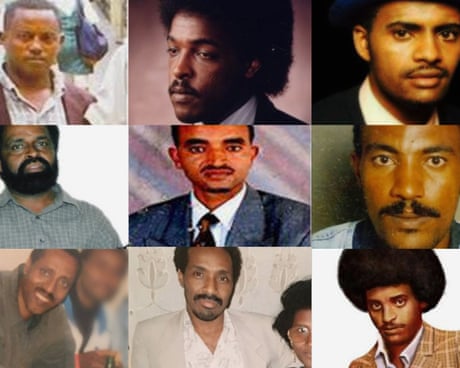
Asrat is one of 16 journalists who disappeared into Eritrea’s prison system 25 years ago on Black Tuesday – 18 September 2001 – when the government shut down all of the newspapers in the country. Neither their families nor their colleagues know whether they are still alive.
The Committee to Protect Journalists (CPJ) has reiterated its call for authorities to disclose the fate and whereabouts of the “Eritrea 16”, who include some of the world’s longest-detained journalists.
Giving this month’s Carlos Cardoso memorial lecture at the African Investigative Journalism Conference in Nairobi, Yirgalem, who fled Eritrea in March 2018 after enduring six years in military prisons, vividly describes her last recollection of Asrat standing outside a police station, cigarette in hand.
“What were you thinking at that moment? And what are you thinking now? Do you blame yourself for being unable to predict that the threats against you could lead to a decades-long disappearance?” she read from the letter she wrote to him five years ago, before describing what she imagines to be Asrat’s current prison experience – if he is still alive.
“I imagine you sitting in one corner of your cell, trying to move your legs after spending so many hours sitting in the same position,” she read. “I imagine you sitting quietly, not knowing what to say or what to do.
“I imagine you knocking on the door when you feel sick or can no longer bear the situation. I imagine you lying on the floor, lost in thought, looking up at the roof of your cell.”
In August, the CPJ announced it would honour the Eritrea 16 with an International Press Freedom award, in recognition of their courage and sacrifice. As well as Asrat, they are Dawit Habtemichael, Dawit Isaak, Ghebrehiwet Keleta, Hamid Mohamed Said, Idris Said, Jimi’ie Kimeil, Mattewos Habteab, Medhanie Haile, Said Abdelkader, Saleh Aljazeeri, Sahle Tsegazeab, Seyoum Tsehaye, Temesgen Ghebreyesus, Tesfay Ghebreab and Yusuf Mohamed Ali.
The journalists will be honoured in absentia at a ceremony in New York on 19 November.
“The award honours their courage, but it cannot replace truth, freedom or justice,” says Jodie Ginsberg, CPJ chief executive, adding that the journalists’ families in Eritrea and elsewhere have been denied answers about their loved ones, including proof that they are alive.
She says the 16 journalists, who are among 335 imprisoned around the world, deserve recognition for their journalism and not only for their decades of disappearance: “Their case is a warning to the world – when journalists can be silenced with impunity, press freedom everywhere is at risk.”
The Nairobi memorial also showed a video featuring relatives of the journalists. Beilula Sium, the adult daughter of Tsehaye, who founded Eritrea’s state broadcaster before going on to work independently, spoke about the only time she saw her father, as a young child.
“Two months after his arrest, my mother begged the [prison] wardens to let him see his child,” she says. “Surprisingly, the warden agreed and we were able to enter for a brief moment, enough time that he could see me through the bars of the prison. It was the first and last time that I’ve been able to be near my father.”
Today, a picture of Sium, barely a year old and in her father’s embrace, reminds her of his physical appearance and the bond the two share.
Besides journalists, Eritrea has imprisoned 12 writers, who have been held incommunicado since 2001, and hundreds of conscientious objectors, including followers of religions not recognised by the state.
Sixty-four Jehovah’s Witnesses, including three aged over 80, have spent a total of more than 400 years in prison. Like the 16 journalists, none have been charged with any crime or tried in court, nor do they know when they will be released.
UN human rights experts have called on the Eritrean authorities to stop the arbitrary detentions and disappearances, while ensuring justice is served to victims and their families.
“The widespread or systematic use of prolonged arbitrary detention, enforced disappearances and religious persecution may constitute crimes against humanity,” the experts say. Eritrea rarely responds to such calls.
While highlighting the events of 18 September 2001, when the state clamped down on the journalists’ activities and made the arrests, Muthoki Mumo, CPJ programme coordinator in Africa, says it is important to protect press freedom everywhere.
“When we turn away and say we are no longer going to ask questions because it’s been 25 years, that it’s hopeless, that is also saying something about the state of our own humanity,” she says.
Yirgalem urged the assembled journalists to “use your voices and your professional platforms” to amplify the call for the imprisoned journalists’ immediate release. “I don’t think we have done enough,” she says. “If we don’t stand for them, nobody will.
“Imagine asking yourself, every single day, ‘Does anyone still remember me?’ Let’s make sure they are not forgotten.”
Understanding what is happening in the Middle East is more important than ever
It’s the Guardian’s job to keep a close focus on events in the region for our global audience.
With reporters sharing live updates around the clock, we’re well-placed to provide comprehensive, fact-checked reporting and to help our audience understand every major development. But we can’t do it without your support.
We rely on the generosity of our readers, whose backing helps to keep our correspondents on the ground and our reporting free from commercial or political influence.
We appreciate that not everyone can afford to pay for news, but if you can, can we count on your support? Here are three good reasons to make the choice to fund us today:
1. Our quality, investigative journalism is a scrutinising force.
2. We are independent and have no billionaire owner dictating what we do – your money directly powers our reporting.
3. It doesn’t cost much, and takes less time than it took to read this message.
Choosing to back us on a monthly basis makes the most impact, meaning we can continue to cover the story from every angle: the conflict, the plight of those affected and what it all means for the future of the region – and the world.